
Hannah Waddingham’s Comment About Eating Burgers With Her Daughter Is Exactly Why People Love Her
The Ted Lasso star’s approach to food feels like the opposite of the “nothing tastes as good as skinny feels” era many of us grew up with.
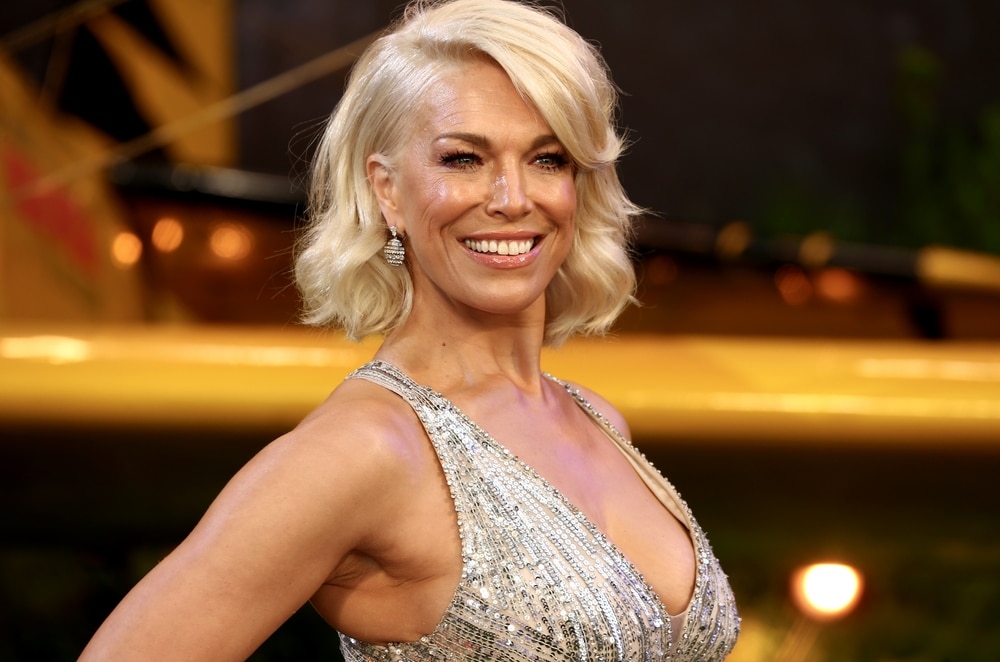
Content note: This article discusses body image and disordered eating.
I love Hannah Waddingham, and I do not say that lightly.
I loved her as Rebecca in Ted Lasso, of course. But I also think she is one of the better real-life celebrity role models we have right now. She is talented, funny, glamorous, and smart, and she does not seem interested in shrinking herself to make anyone else more comfortable.
So when Waddingham talked about the example she tries to set for her 11-year-old daughter, I understood why people immediately latched onto it.
In a recent Women’s Health interview, Waddingham spoke about raising her daughter, Kitty, as a single parent. She said her daughter is “undoubtedly my greatest achievement,” and talked about keeping communication open as Kitty gets older.
Then, during Women’s Health’s companion podcast Just As Well, Waddingham talked about body image and the example she wants to set at home.
“I’m not a small woman in any way, shape, or form,” Waddingham said. “Do I like to look after myself? Yes. Am I obsessed with that? Absolutely not.” She added that Kitty sees her eating crisps and chips, and that they go for burgers.
Eating a burger in front of your child should not sound notable. But, unfortunately, a lot of us grew up in a culture that made food feel a lot more complicated than that.
I did not grow up with what the internet now calls an “almond mom,” thankfully. But I absolutely grew up in the “nothing tastes as good as skinny feels” era. Heroin chic was everywhere. The media treated women’s bodies like public property (not that much has changed). A celebrity gaining a few pounds was the hottest of hot news.
And all of that stuff gets in, even when nobody in your actual house is saying it to you.
I remember thinking about food in terms of whether it would “make me fat.” I remember eating Lean Cuisines and thinking I was being very responsible and adult, when really I was just hungry and trying to keep my body in check.
I was lucky that it never became a full-blown eating disorder for me. But my relationship with food was not exactly healthy for a long time, either.
I think that is why I keep coming back to her comment. It should be completely boring that a kid sees her mom eat a burger.
But a lot of us did not grow up with food feeling boring. Food had rules. Food had guilt. Food had little mental calculations attached to it. So yes, I appreciate Waddingham saying it plainly: her daughter sees her eat real food, and nobody has to make it weird.
Online, people seemed to get that immediately.
After Women’s Health shared clips from the interview, commenters praised Waddingham’s attitude toward her body and her daughter. “Striving for small is soo boring,” one person wrote. “Celebrate strong and the size that is right for you!!!”
Another commenter called Waddingham “the most refreshing woman in showbiz.” Someone else simply wrote, “Role model.”
The response makes sense. The “almond mom” conversation may sound like internet slang, but the thing people are talking about is real. It is the parent who comments on every bite or the household where certain foods are treated like character flaws. It’s casual body criticism that gets absorbed long before a kid knows what to do with it.
And I do worry that we are slipping back toward the body culture I grew up with, only now it has different branding.
The language is softer. People talk about wellness, optimization, hormone health, and inflammation. GLP-1 medications like Ozempic, Wegovy, Mounjaro, and Zepbound have also changed the weight conversation.
I am not judging anyone for using them. That is between a person and their doctor. But I do think it is fair to question what happens when thinness starts to feel like the default goal again.
Eating-disorder experts have raised concerns about GLP-1 medications being misused as appetite suppressants, potentially triggering relapse, or reinforcing weight stigma for people who are already vulnerable. ANAD has noted that professionals are divided on these drugs, with some seeing possible clinical uses and others warning about misuse and relapse risks.
A recent Washington Post report also highlighted concerns from doctors and mental health professionals about people with current or past eating disorders accessing GLP-1 medications, including through online providers.
This does not mean the medications are inherently bad. But it does mean the cultural conversation around them deserves more care than “everyone should be smaller now.”
Waddingham’s comments are refreshing to me because they push in the opposite direction. Her daughter is seeing a woman care for herself without making food the enemy.
I feel the same way about Ilona Maher. I love that she talks about strength and bodies without making the whole thing feel miserable. One of her recent posts reframed a few extra pounds as evidence of actually living your life: going out to eat, traveling, laughing with people you love. I wish that kind of messaging had been louder when I was younger.
Ben Carpenter and Sohee Carpenter have been helpful for me, too. Their content cuts through a lot of the nonsense in the fitness space without swapping one obsession for another.
I do not think every parent needs to turn dinner into a body-positive lesson. In fact, that would probably get exhausting fast.
Sometimes the better lesson is a little subtler. Just eat the burger, and enjoy the fries. Let kids see adults living in bodies without constantly narrating everything that is supposedly wrong with them.
Waddingham seems to understand that her daughter is watching the small stuff. And judging by the reaction online, a lot of adults wish they had grown up watching more of that, too. Myself included.
For support, the National Alliance for Eating Disorders offers help and referrals at 1-866-662-1235. ANAD’s eating disorder helpline is available at 1-888-375-7767.


Nice post
Great example to set, too many people trying to live a life they see on instagram to meet social “norms”, real life is far from that!
She is awesome!
This blog post made me hungry lol.
Love this. Seeing a parent eat without guilt is such a simple but powerful example for kids.
Love this so much!
Thanks for sharing this