
Experts Say This Calming Paint Color Can Help Soothe Anxious Dogs While You’re at Work
An art therapist says swapping harsh colors could lower your dog’s stress levels and make long workdays at home feel calmer.

Anyone who’s ever come home to shredded pillows, clawed doors, or a dog who’s panting and pacing already knows: some pups do not handle alone time gracefully.
Most advice for separation anxiety focuses on training, puzzle toys, or leaving the TV on. All helpful. But there’s one part of your dog’s environment that rarely gets mentioned—and they’re staring at it the entire time you’re gone: the color of the room.
“We tend to forget that our pets are absorbing their environment in ways we can never fully appreciate,” says Dr. Eleni Nicolaou, an art therapist and creative wellness expert with Davincified. “Dogs may not see color the way we do, but that doesn’t mean they’re unaffected by it. The visual tone of a room can either soothe them or add to their stress.”
How “visual noise” can stress your dog out
Dogs don’t see the full rainbow like we do. Their vision is centered around blues, yellows, and grays—so no, your dog is not admiring your terracotta accent wall the way you think.
But where they really excel is contrast and movement. That means the overall busyness of a room can matter more than the exact color name on the paint can.
“Think of visual noise as the canine equivalent of a loud, chaotic room,” Nicolaou explains. “High-contrast patterns, bright clashing colors, and busy wall art can overstimulate a dog’s visual processing. For a pet already prone to anxiety, this creates an environment that feels unsettled rather than safe.”
If your dog already struggles when you leave, that extra visual chaos can make things worse. Alone in the house, heart rate up, energy with nowhere to go, and surrounded by harsh patterns or jarring colors? That’s a recipe for more cortisol, not less, aka more barking, pacing, and destruction.
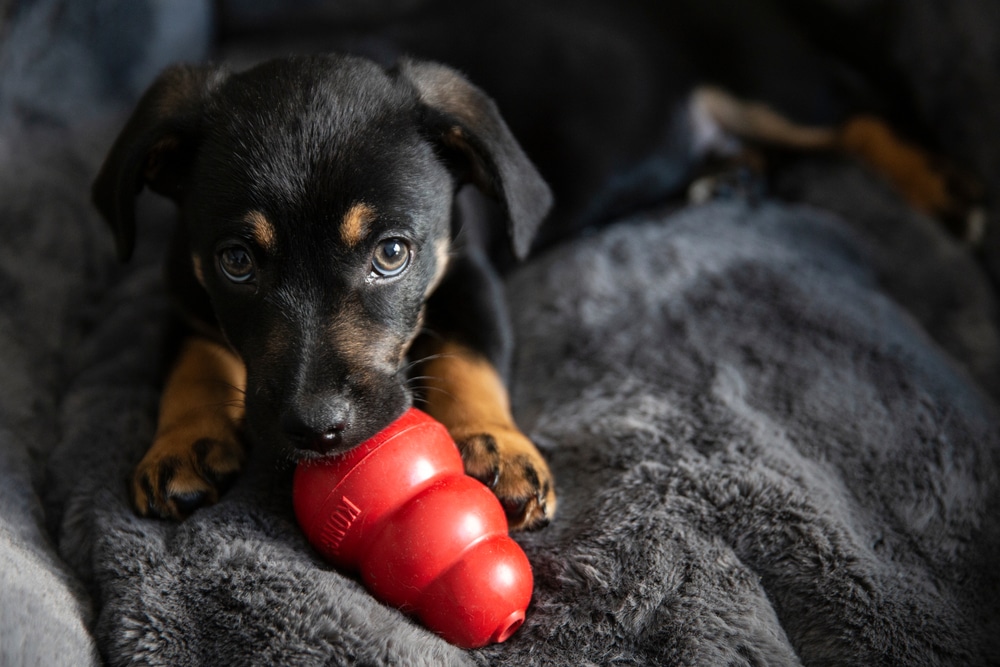
Colors that can unsettle dogs
No one is saying your wall color is going to “cause” separation anxiety. But certain choices can crank up the tension for a dog who’s already on edge.
Nicolaou says a few types of colors and patterns are more likely to feel unsettling for dogs:
1. Bright reds and oranges
Dogs don’t see bright red as “red.” To them, it shows up more as a muddy, brownish-yellow tone—especially when it’s sitting next to cooler shades.
“The contrast creates visual tension that dogs can find unsettling, even if they can’t articulate why,” Nicolaou says.
So that bold fire-engine-red dog bed that looks cute on Instagram? It might be a lot less relaxing for the actual dog using it.
2. Stark black-and-white patterns
High-contrast stripes, chevron, checkerboard floors, and graphic wall art…these all look trendy to us. To a dog stuck staring at that environment for hours, it can feel intense and overstimulating.
This doesn’t mean you need to rip out your rug. But if your most anxious dog spends all day in the one room with bold black-and-white decor, it might be worth rethinking.
3. Fluorescent or overly saturated colors
Anything that feels “loud” or harsh to your eyes is not doing your dog any favors either.
“Anything that feels intense to us is likely amplified for a dog in terms of visual stress,” Nicolaou notes. “Their eyes are designed to detect movement and subtle shifts in light, so overly bright environments can feel aggressive.”
Neon throw blankets, super-saturated accent walls, bright plastic crates, none of this screams “calm safe den” to a nervous pup.
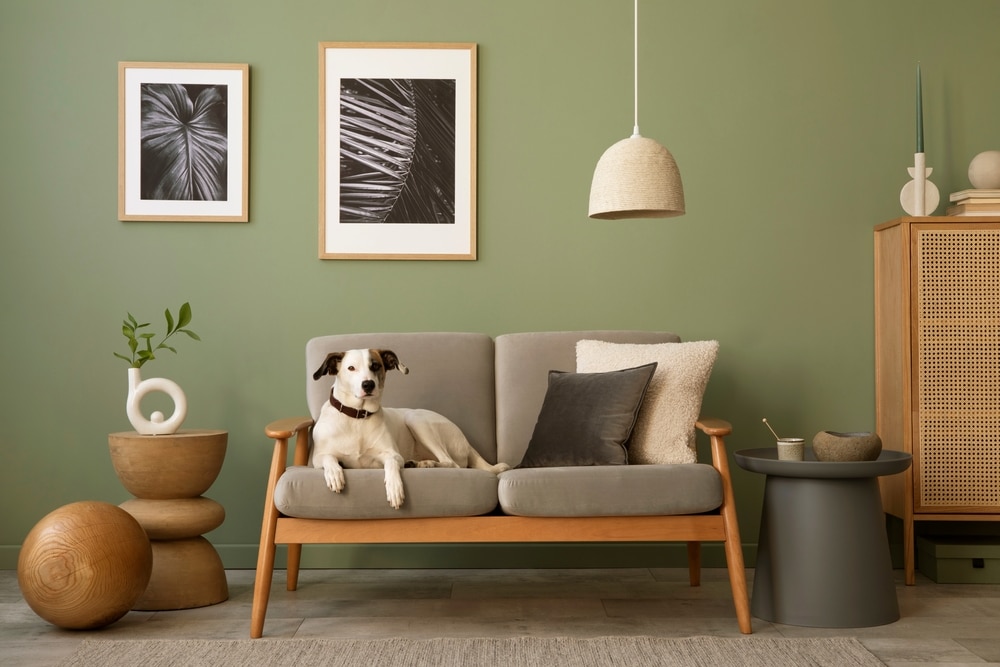
Why soft sage green stands out for anxious dogs
So what does help? According to Nicolaou, a muted sage green is one of the most calming options you can bring into a dog’s space.
“Sage green falls within a range that dogs can perceive as a calm, neutral tone,” she explains. “It doesn’t create harsh contrasts, and it mimics the natural outdoor tones that dogs find instinctively comforting. There’s a reason so many animals seek out green, leafy spaces to rest.”
Green tones in general have long been linked with lower heart rates and reduced cortisol in both humans and animals. That doesn’t turn your living room into a dog spa, but it can nudge the environment in the right direction—especially for a dog who already sees that space as “the place I’m alone all day.”
For a pup who spends long workdays in one room or crate, Nicolaou says soft sage green can help that area feel more like a restful den than a visually harsh waiting room.
How to use calming colors in your dog’s space (without repainting your whole house)
Good news: you don’t need to repaint your entire home in one weekend and toss every bright pillow you own.
Nicolaou recommends starting small and focusing on the place where your dog actually spends the most time alone—usually a crate, a gated room, or a specific corner of the house.
A few simple swaps:
- Choose a sage-colored dog bed or blanket.
If your dog sleeps in a crate or on a specific bed while you’re gone, this is the easiest starting point. - Tone down the backdrop.
If that space is surrounded by busy patterns or high-contrast decor, try softening it with a muted green throw, a simple curtain, or a plain rug. - Keep the “alone zone” visually simple.
Save the bold art and wild patterns for the living room. The area where your dog is crated can be calmer—fewer clashing colors, fewer busy prints, more soft, neutral tones.
“You don’t need a complete home makeover,” Nicolaou says. “Even small changes, like a sage-colored dog bed, a soft green blanket in their crate, or muted green accents in the room where they spend most of their time, can make a noticeable difference.”
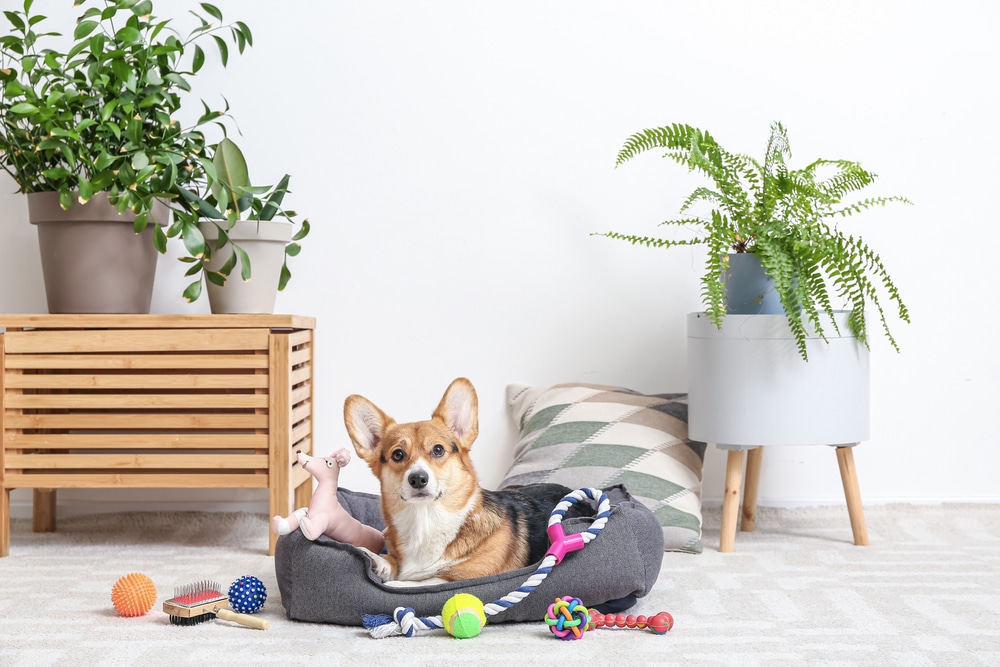
Color isn’t a cure-all—but it can be one more tool
To be clear: paint alone isn’t going to fix serious separation anxiety. If your dog is howling for hours, injuring themselves, or destroying your home every time you leave, this is absolutely a vet and trainer conversation.
But once you’ve addressed the big stuff, such as behavior work, exercise, routine, color can be one more piece of the puzzle.
“Our pets are more attuned to their surroundings than we tend to realize,” Nicolaou says. “While we’re focused on training, toys, and routines, we can overlook one of the simplest ways to support a dog’s emotional wellbeing: the colors they’re surrounded by every day.”
Her advice: think of color like background music. It won’t magically change your dog’s personality, but it can make the overall vibe more or less stressful.
“For dogs who struggle with separation anxiety, small visual changes can make a big difference,” she says. “Swapping out a bright red dog bed for a muted sage green one, or adding soft green tones to the room where your dog spends most of their time alone, can help create a calmer atmosphere.”
If you’re looking for even more ways to treat your dog well, you can also dive into the new data on which U.S. states are most likely to pamper their pets, and check out a roundup of tough, long-lasting dog toys that are designed to survive serious chewers and save you money over time.
Indestructible Dog Toys That’ll Keep Your Wallet and Pup Happy!
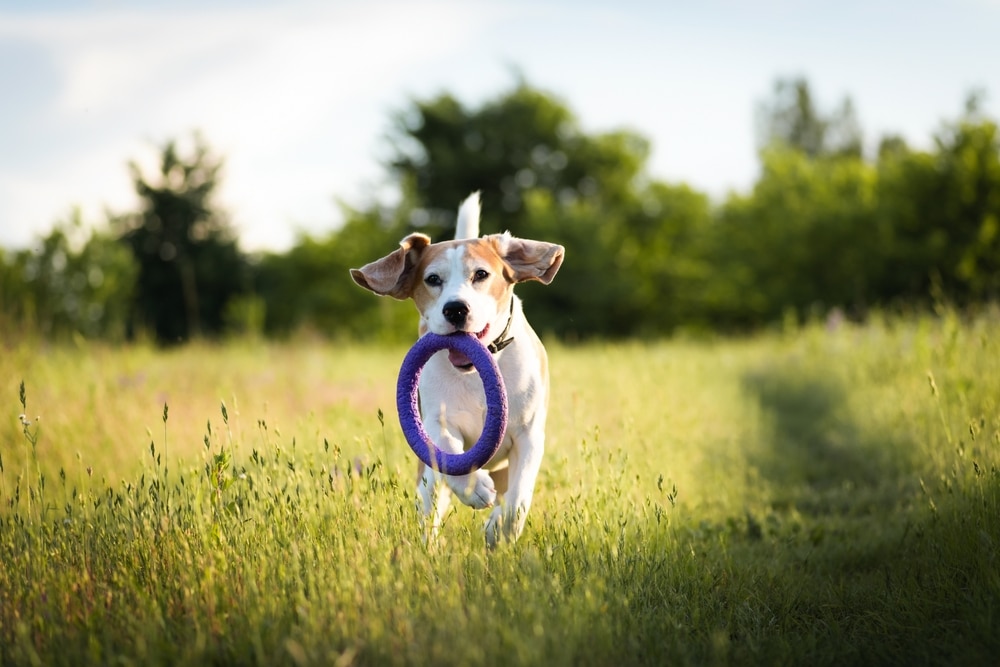
As a pet owner, I know firsthand the struggle of finding suitable toys for your furry friend. Not only do you want them to be entertained, but to stay safe. It’s also nice if they do not destroy the toy within minutes of playing with it(!) After testing numerous dog toys with my pitbull, I have compiled a list of dog-tested indestructible dog toys that will provide hours of fun, save you money, and withstand the toughest chewers.
Read more: Indestructible Dog Toys That’ll Keep Your Wallet and Pup Happy!
The 10 States Least Likely to Buy Their Pets a Gift, Ranked

Not every state is overflowing with pet stockings, holiday toys, and birthday treats. While millions of Americans happily spoil their pets each year, a new nationwide analysis shows that some states rarely, if ever, splurge on non-essential gifts for their animals.
Read more: The 10 States Least Likely to Buy Their Pets a Gift, Ranked
The 10 U.S. States Most Likely to Spoil Their Pets, According to New Data

A new analysis reveals where dogs and cats are getting the most toys, treats, and holiday gifts this year.
Read more: The 10 U.S. States Most Likely to Spoil Their Pets, According to New Data
The 10 Most Dog-Friendly Cities in the U.S., According to a Recent Study

If you ever find yourself looking to move or planning a well-deserved vacay with your pup, these cities in the U.S. are vetted by a recent study as having the most dog-friendly environment.
Read more: The 10 Most Dog-Friendly Cities in the U.S., According to a Recent Study
BARK Air Launches as The World’s First Airline Designed Exclusively for Dogs

From booking to arrival, in-flight services to disembarkation, dogs will experience a luxurious, curated journey, making them the true VIPs.
Read more: BARK Air Launches as The World’s First Airline Designed Exclusively for Dogs