
Kenya’s $50,000 travel insurance rule is on hold. Here’s what to know
A legal challenge has paused the rollout, but travelers with existing insurance may still need to take a closer look at their benefits.

Kenya’s plan to require foreign visitors to carry at least $50,000 in travel health insurance coverage has been temporarily halted by a court order. A hearing is scheduled for Sept. 16, according to The EastAfrican.
However, it raises a question worth asking before any international trip: Does the insurance you already bought cover everything you think it does?
I asked travel insurance comparison companies Squaremouth and InsureMyTrip what travelers should check. Their responses pointed to a detail that is easy to overlook when comparing policies by price and the biggest dollar amount on the page.
What Kenya’s insurance rule would require
The disputed July 30 notice sets insurance minimums for foreign visitors staying in Kenya for less than 12 months. The $50,000 figure refers to coverage, not the price of an insurance policy or a fee travelers must pay to enter the country.
Before the court pause, Kenya’s Ministry of Health clarified that insurance purchased in a traveler’s home country could qualify if it met the prescribed benefits. The plan was not to make every visitor automatically buy a second policy, according to VisasNews’ reporting on the clarification.
A $50,000 policy may still miss a required benefit
The published minimums for the now-paused program include the following benefits, as outlined in reporting on Kenya’s insurance framework.
| Benefit | Published minimum |
| Medical expenses | $20,000 |
| Emergency medical transportation | $25,000 |
| Repatriation of mortal remains | $5,000 |
| Mental health treatment | $1,000 |
| Prescribed medicines | $300 |
“A policy with $50,000 or more in coverage doesn’t necessarily meet the requirements if the benefits don’t align with the required categories,” said Suzanne Morrow, CEO of InsureMyTrip.
Morrow said benefits may not appear as separate limits in the same way Kenya lists them. Travelers should ask their insurer or a licensed agent to explain anything that is unclear.
Mental health coverage stood out in Squaremouth’s example
“Mental health is likely the biggest area for travelers to focus on, as it’s not a benefit commonly included in travel insurance policies,” said Chrissy Valdez, senior director of operations at Squaremouth.
Squaremouth provided a sample search for one 35-year-old traveler insuring a $15,000 Kenya trip scheduled for Sept. 21 through Oct. 2, 2026. Of the 38 comprehensive policies available in that example, the company said only two included mental health coverage.
That was one quote scenario, not a study of the entire travel insurance market. Having a mental health benefit also doesn’t guarantee that a policy will meet every requirement Kenya ultimately enforces.

Should travelers change their insurance while the rule is paused?
For travelers who already have insurance, Valdez recommends checking for mental health coverage first. For travelers still shopping, she recommends choosing a plan that meets the published minimums while continuing to watch for official updates.
If you find a gap and want to replace your policy, ask about its refund window. Most comprehensive plans offer a free-look period of 10 to 15 days, but the deadline, eligibility, and any fees depend on the policy, according to Squaremouth’s explanation of refund periods.
Before canceling, confirm the replacement coverage and ask what benefits you could lose by switching. If a refund is no longer available, Valdez suggests discussing supplemental travel medical insurance with an agent. Don’t assume that combining two policies automatically satisfies a destination’s requirements.
The minimum may not be enough for a safari
I visited Kenya, including Nairobi, Samburu, and the Maasai Mara, before this latest insurance rollout. It was by far the most expensive trip I had ever taken, and parts of the itinerary were very remote.
I had used Squaremouth to find and purchase my policy and found the process very helpful. With that much invested in the trip, I wasn’t about to leave it to chance. Travel insurance was a must for me.
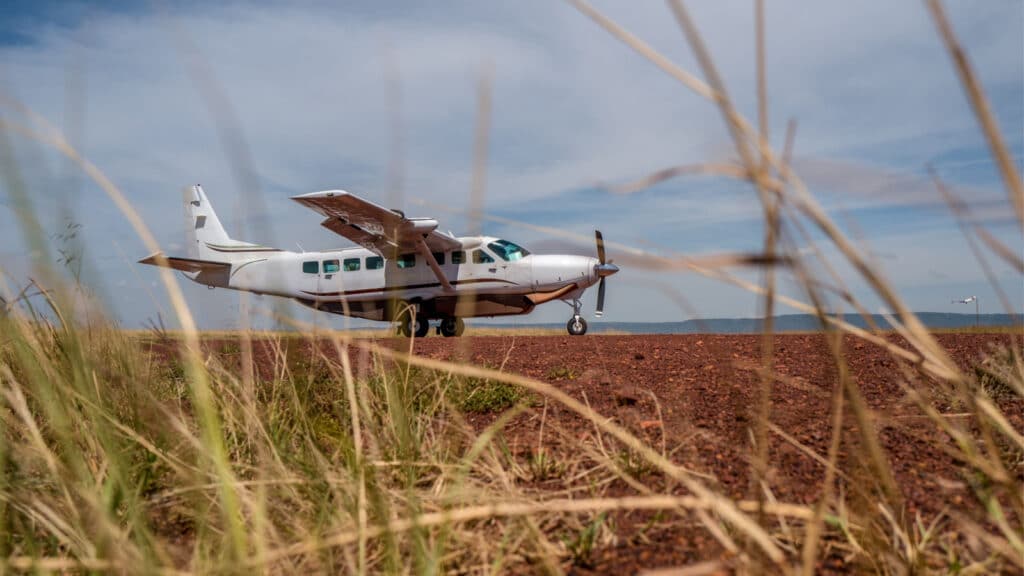
The published $25,000 emergency transportation minimum deserves particular attention if your itinerary takes you far from a major hospital.
“From a remote location, costs can quickly reach tens of thousands of dollars, and complex international evacuations can reach six figures,” Morrow said.
Ask where an evacuation benefit would take you, who must authorize it, and whether your planned activities are covered.
“The goal shouldn’t necessarily be to find the least expensive policy that meets an entry requirement,” Morrow said. “It should be to find coverage that makes sense for where you’re going, what you’re doing and what you’ve invested in the trip
What to check before departure
- Check the latest official guidance. Review Kenya’s official eTA website and government updates close to departure, particularly after the scheduled court hearing.
- Review the actual policy documents. Compare individual benefits, limits, exclusions, and coverage dates. If you plan to rely on U.S. health insurance, ask specifically about overseas treatment, evacuation, and repatriation rather than assuming they are included.
- Get unclear coverage explained before buying more. Ask your insurer or a licensed agent to identify any gaps and explain what a replacement or supplemental policy would change.
- Keep proof and assistance details accessible. Carry your insurance documents and emergency contact information, and recheck any documentation requirements before you leave.
Planning a Kenya trip? I’ve also shared ideas for what to do in Kenya and where to stay.


I wonder how this will affect tourism if visitors have to purchase additional insurance.
Thanks for the info!
thanks for the update
Thanks for aheads up but im not gonna take risk
Thank you for the update on this
This is important to know. Thank you.