
What to pack for the Galápagos Islands: My complete packing list
I had plenty of questions about what to pack for the Galápagos. We were spending eight days island-hopping, with a full hike at Sierra Negra and a lot of time in the water. I also wanted something clean to wear to dinner that hadn’t been snorkeling with me earlier that day.
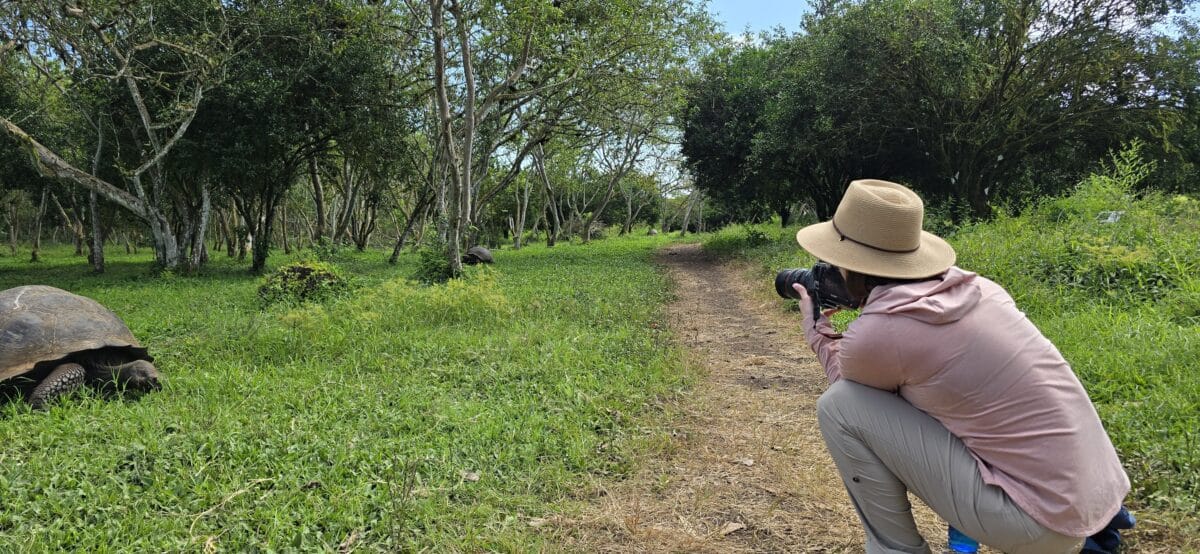
My husband and I traveled through Santa Cruz, Isabela, and San Cristóbal with Galakiwi. This is what we used, what I’d pack again, and what I wish I’d done differently. You can see the trip in my video below!
The biggest thing to keep in mind is that the Galápagos is not a dressy destination.
I wore sun shirts and hiking pants during the day, or swimwear for our water activities. Dinner was usually a casual dress and Birkenstocks. There was no reason to pack anything fancy.
I was especially careful about sun protection, and this was the first warm-weather trip where I didn’t get burned. I barely came home with a tan! The long sleeves and hat were staying on, even when it was hot.
Disclosure: some of these links are affiliate links. Meaning, if you click a link and make a purchase, Have Clothes, Will Travel gets a very small commission at no extra cost to you. Thank you for supporting the brands that make this blog possible!
My top Galápagos packing tip
Pack two complete swim outfits if your itinerary includes multiple days of snorkeling, diving, kayaking, or boat excursions.
I brought two pairs of my Title Nine swim shorts and two swim active tops. That meant one set could be drying while I wore the other for the day. I also packed individual laundry soap packets so I could wash them in the sink between outings.
This system worked much better than packing one swimsuit and repeatedly pulling on something that was still damp. It also saved me from bringing a pile of swimwear I did not need.
How this packing list changes by season
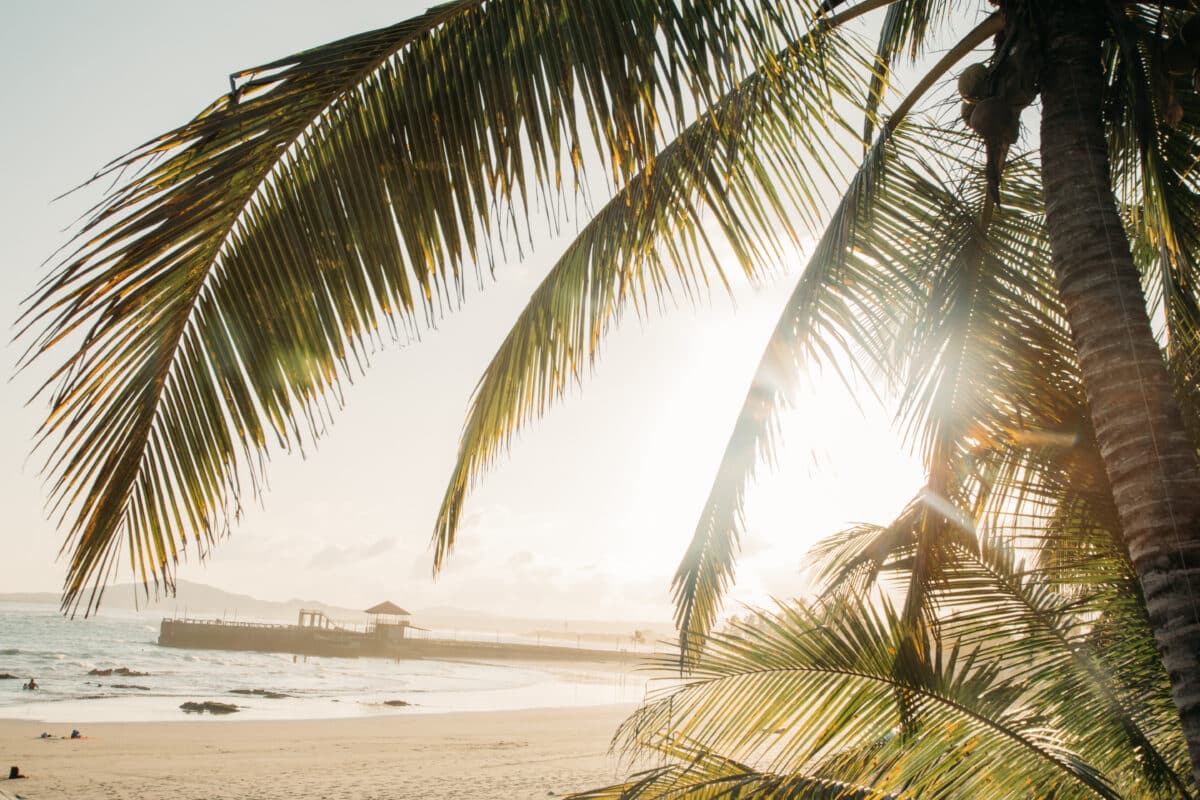
We visited in May, near the end of the warmer season. I mostly wanted lightweight clothing that kept the sun off me. We didn’t need wetsuits for most of our snorkeling, although I was grateful to have one at Kicker Rock!
The Galápagos has two broad seasons, with some variation in when they start and end:
January through May: This is generally the hotter season, with warmer air and sea temperatures and a greater chance of heavier rain. Pack very breathable clothing, a packable rain jacket or poncho, two swim outfits, and plenty of sun protection. Rain showers do not mean you can ease up on the sunscreen.
June through December: Cooler air and water temperatures become more common, along with stronger winds and the misty conditions known as garúa. I would add a warmer fleece or sweatshirt, a wind-resistant outer layer, and possibly another pair of lightweight pants. Travelers who get cold easily should ask their tour or cruise operator about wetsuit thickness and availability before the trip.
Most of this list works for either season. The biggest adjustment is how much warmth you’ll want on the boats and while snorkeling.
Detailed Galápagos packing list for women and men
My husband’s list was nearly identical to mine, so I’ve pulled his specifics into one section after the list instead of repeating them under every item.
1. Lightweight luggage and packing cubes
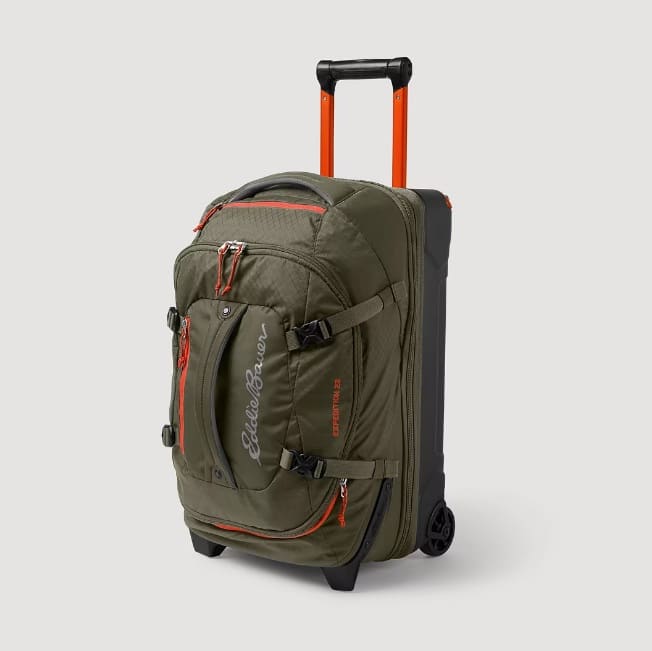
If you are island-hopping, smaller and lighter luggage will make your life much easier. You may be moving between planes, ferries, water taxis, docks, and hotels, sometimes all in the same day.
We flew from Isabela to San Cristóbal on a small inter-island plane, and the checked-bag allowance was only 25 pounds. I kept my camera equipment in a carry-on backpack and packed the rest carefully. Check the baggage rules for every flight in your itinerary because the limits for small inter-island flights may be much lower than the allowance on your international flight.
Packing cubes also helped me keep swimwear, hiking clothes, dresses, and underwear separated without having to completely unpack at every hotel. (I like using these packing cubes.)
2. A comfortable day backpack
My backpack came on our excursions and held my camera gear along with things I’d need during the day, including water and sunscreen. It needed to be comfortable for hiking and small enough to tuck out of the way on a boat.
A rain cover or waterproof liner is useful for keeping electronics dry. Sea spray can reach your bag even under a covered deck.
3. UPF sun shirts
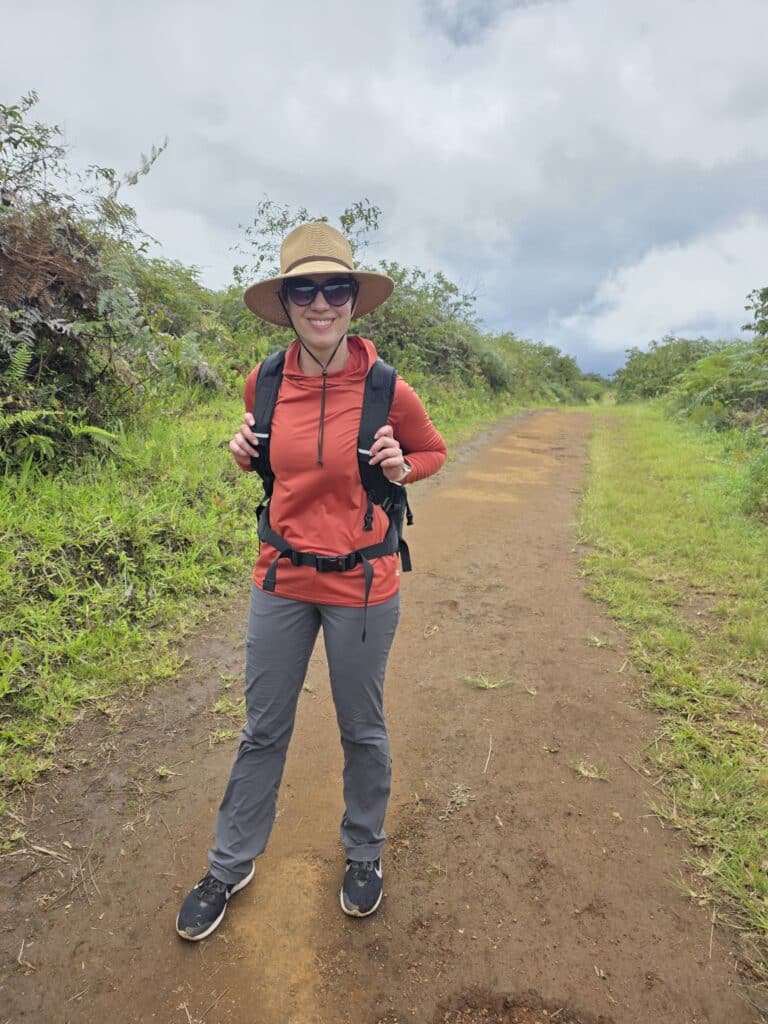
My Eclipse 37.5 sun hoodies were my most-worn pieces on this trip. These have UPF 50+ protection, and I wore them constantly. The hood was especially handy for keeping the sun off the back of my neck.
Use code LINDSEYPULS for 10% off Eclipse Sun Products.
I loved these shirts in Peru and on safari in Rwanda, and they worked just as well here.
I also packed my long-sleeve REI hiking shirt (the one I used for the Inca Trail, below). It was good, and I would bring it again, although it felt a bit warmer than my Eclipse shirts. I used it for flying days.
4. A wide-brimmed sun hat
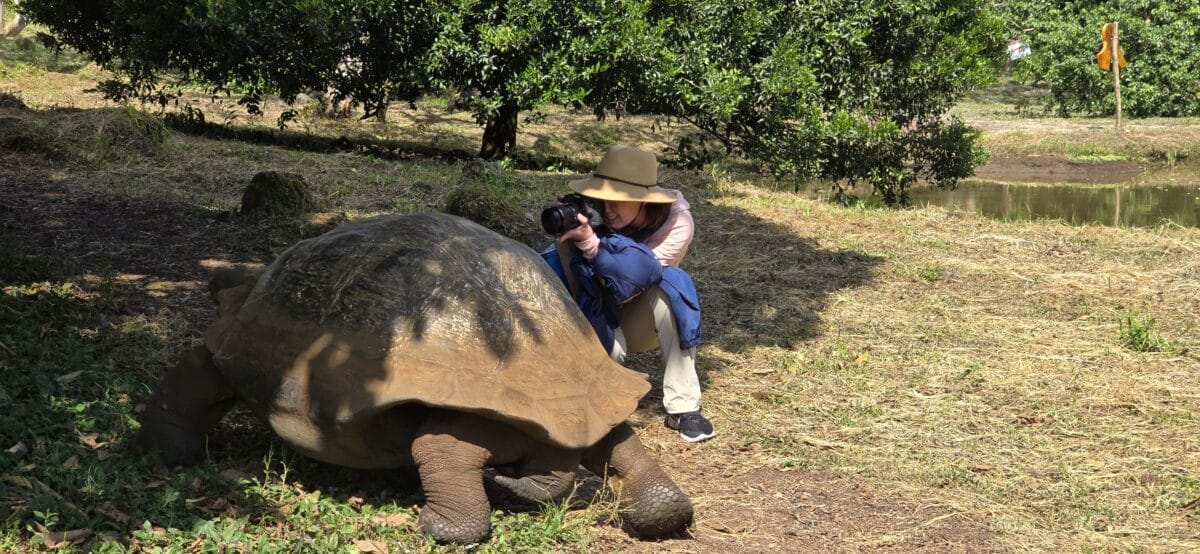
I do not always love wearing hats, but I wore a sun hat on this trip, and it was 100% necessary. It is a big part of why I did not get burned.
Look for one with a brim that protects your face and neck and a chin strap that will keep it from blowing away on a boat. A packable style is easiest to fit into your luggage, but make sure it still gives you enough coverage.
5. Two swim outfits
This is my top tip from above, so I’ll keep it short: pack two complete sets and rotate them.
I basically lived in my Title Nine swim shorts and swim active tops during our water-heavy days. I prefer swim shorts for active trips because they stay put while snorkeling and kayaking, and give me more coverage when climbing in and out of boats. (You can see them in action in my YouTube video.)
Pack whatever swimwear you’re comfortable being active in. Two complete sets were enough for me, with sink washing between outings.
6. Hiking or travel pants/shorts
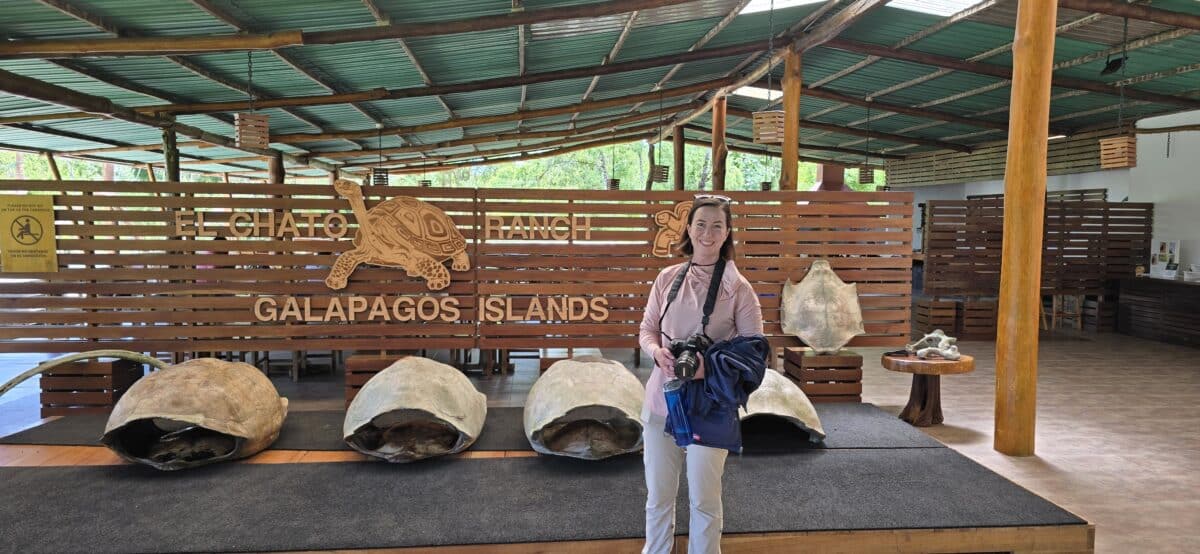
I wore the same Eddie Bauer roll-up hiking pants that I have taken on many other trips over the last 8 years. They are comfortable, easy to move in, breathable, and practical when you are switching between trails, boats, and town.
Lightweight hiking pants also offer more sun and bug protection than shorts. I would bring two pairs so you can wash one and let it dry while wearing the other.
That said, I did have one lightweight pair of Free Fly travel shorts along. I used these on our kayaking day and for hanging out around the hotels.
7. Casual dresses for dinner
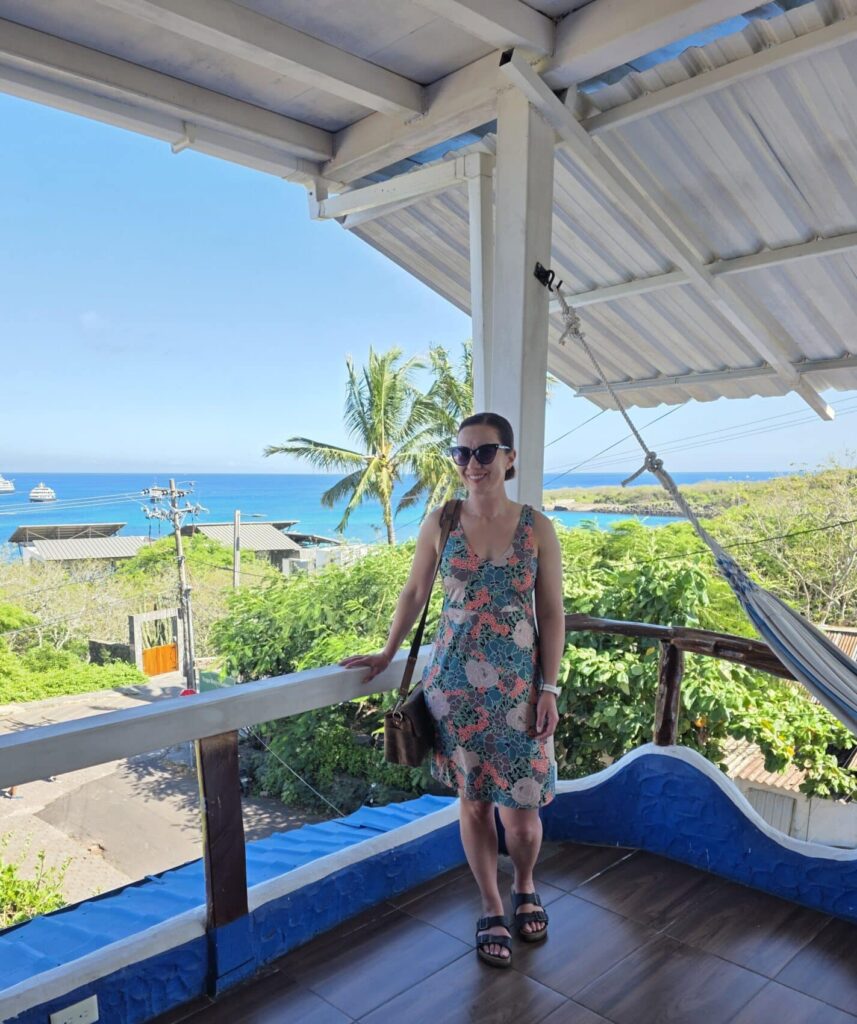
I brought my Carve Designs dress and a Woolx dress. Both were easy to pack, comfortable in the heat, quick-drying, and nice enough that I felt put together after spending the day in hiking clothes or swimwear.
One or two casual dresses were plenty for our trip. If dresses are not your thing, a lightweight shirt with travel pants or shorts would work just as well. Linen pants would also be nice to change into at night. (I like these.)
8. Comfortable sneakers, plus boots for long hikes
I wore my trusty Nikes for almost the entire trip, and they handled the sightseeing just fine.
The one exception was Sierra Negra. We did the full hike, and I wished I had my hiking boots. I survived in sneakers, but boots would have been more comfortable. If Sierra Negra or another long hike is on your itinerary, pack your boots. Otherwise, sneakers are all you need.
9. Comfortable sandals
At night, I changed into my Birkenstocks and a dress. They were also useful around the hotel, and anytime I wanted to give my feet a break from sneakers.
You only need one pair of casual sandals. I would choose something comfortable enough for walking around town rather than packing flimsy flip-flops solely for the beach. If you’re doing a cruise, see my note on water shoes in the cruise section below.
10. Your own snorkel gear
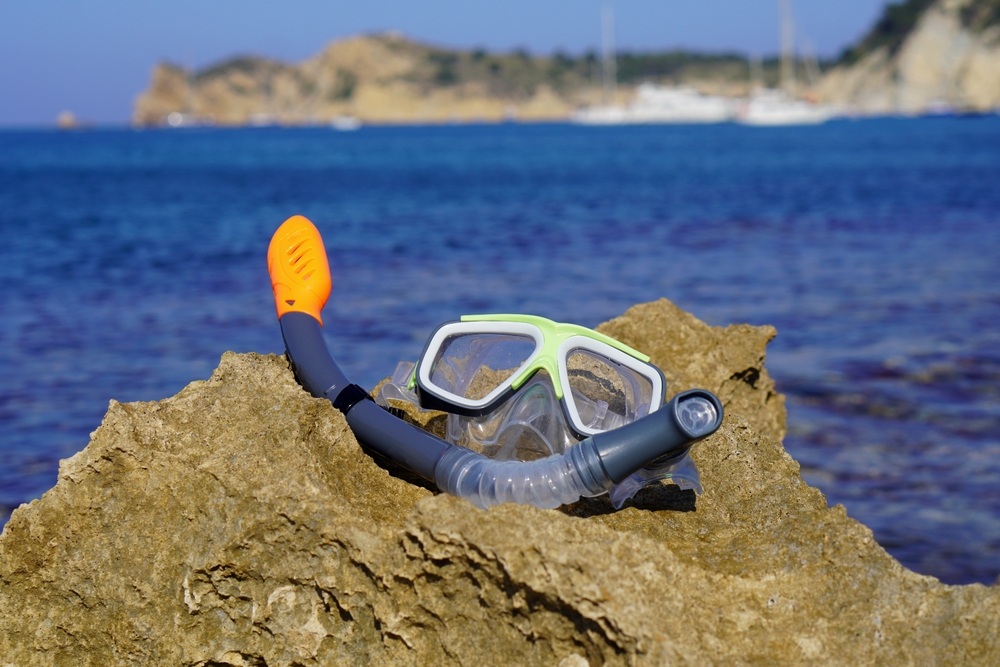
We brought our own snorkel masks and snorkels this time, and I was glad we did. Having gear that fits correctly is far more comfortable than hoping a loaner mask will seal properly.
We went to a local dive shop before the trip and had everything fitted. I strongly recommend doing this instead of ordering a random mask online right before you leave. A dive shop can help you check the seal and find a mask that works with the shape of your face.
One warning: many new masks have a thin manufacturing film on the lenses that needs to be removed before you use them. I did not clean mine well enough, and it fogged much more than it should have. Follow the manufacturer’s cleaning instructions before the trip, and test the mask in a pool or at least at home while you still have time to fix any problems.
You may not need to pack fins, especially if your tour company provides them. They take up quite a bit of luggage space, so confirm what will be available before bringing your own.
11. Rash guard or UPF swim top
Even if you plan to wear sunscreen, a long-sleeve layer gives you extra protection while snorkeling and kayaking. Sunscreen can rub or wash off, and it is easy to lose track of time in the water.
Look for UPF-rated fabric and a close fit that will not billow while you swim. You may not need a separate piece for this. Depending on the day’s schedule, one of my sun shirts or swim active tops did the job. If you want a dedicated rash guard, I love this one by Carve Designs.
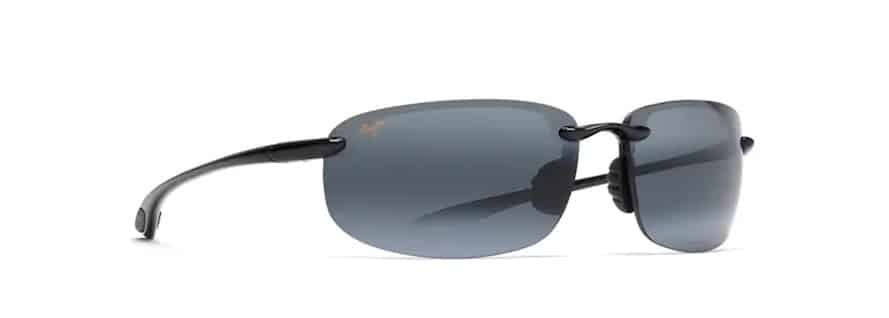
12. Sunglasses
Bring polarized sunglasses that fit securely and are comfortable enough to wear all day. The glare from the water can be intense, and you will likely be wearing them on boats as well as on land. (We love these sunglasses for active trips like this.)
I would also pack a retainer strap so an expensive pair does not disappear over the side of a boat.
13. Reef-conscious sunscreen and lip balm with SPF
I was diligent about sunscreen on this trip, even though I was already wearing long sleeves and a hat. Pack enough for your entire trip and reapply it, especially after snorkeling or sweating.
“Reef-conscious” generally means a mineral sunscreen (zinc oxide or titanium dioxide) without oxybenzone or octinoxate. (I like this one.)
Do not forget easy-to-miss areas such as your ears, hands, feet, and the backs of your legs. Lip balm with SPF is also worth packing because your lips are exposed during long days outside. And there is nothing worse than burned lips! (This is all that I use.)
14. Laundry soap packets
Individual laundry detergent packets take up almost no room and let me wash swimwear and lightweight clothing in the hotel sink. They are the reason I could pack fewer pieces.
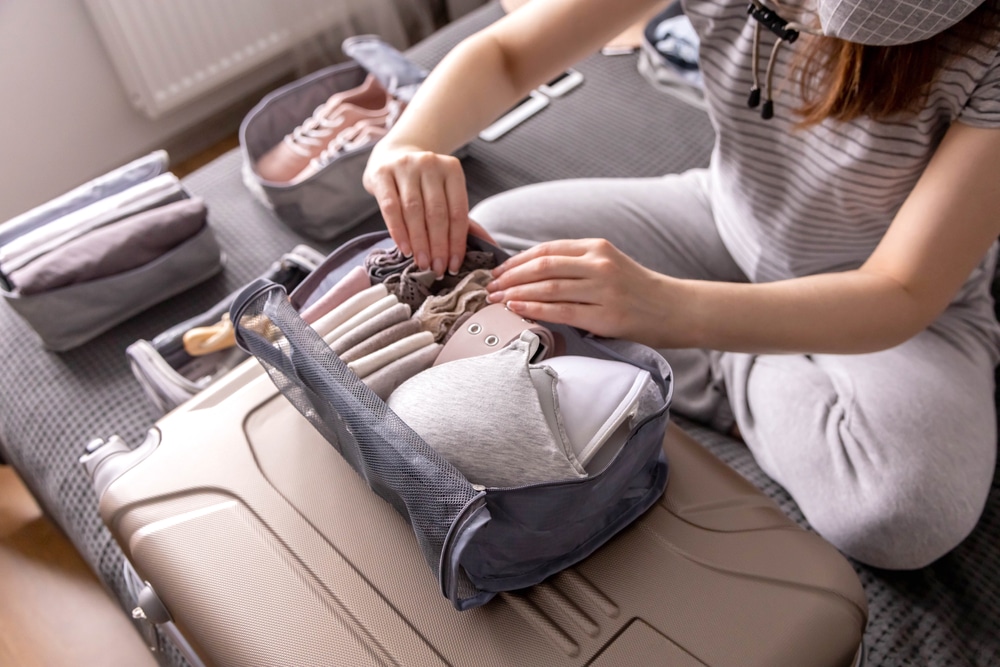
15. Quick-drying underwear and socks
Lightweight, moisture-wicking underwear and socks are much easier to wash and dry during an active trip. Bring enough to avoid doing laundry constantly, but remember that you can rewear outer layers more easily than socks and underwear.
I would also pack at least one or two extra pairs of socks in case yours get wet during an excursion.
Read next: These are the 12 pairs of underwear women swear by for travel
16. A light layer and rain protection
The Galápagos may be warm, but boat rides and early mornings can feel cooler, especially when you are wet or the wind picks up. A light sweatshirt or packable jacket should be enough for most itineraries. (I used this one.)
For rain, either a packable rain jacket or a poncho will work. A poncho takes up very little room and will protect you and your clothing in a downpour. I had my travel jacket along, and that sufficed for protecting me from the elements when I was there in May.
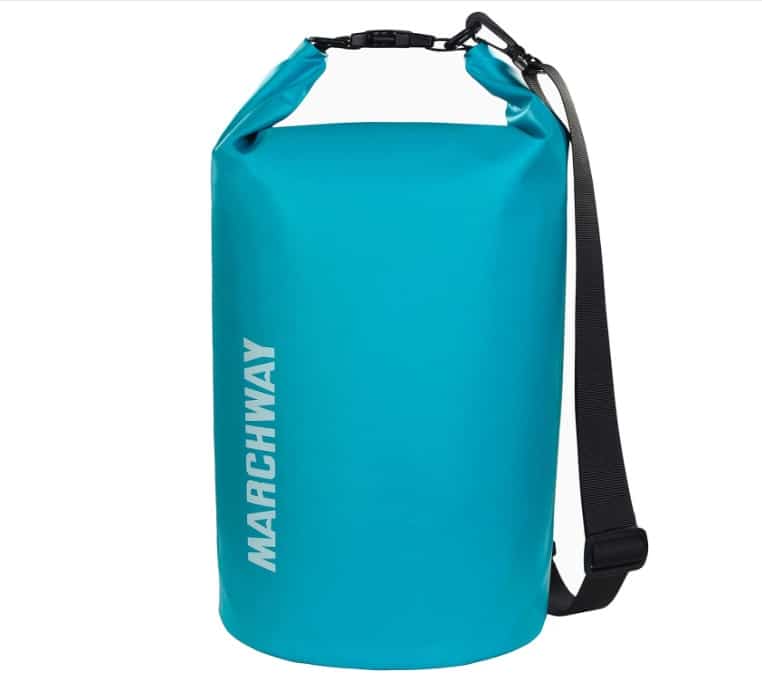
17. Dry bag or waterproof phone pouch
A small dry bag protects your phone, wallet, and dry clothes on boat rides. Even under a covered deck, sea spray finds things you thought were safe.
If you want phone photos in the water, use a properly sealed pouch and test it at home first.
18. Reusable water bottle
Fill your bottle before you leave for the day. Excursions run long, and you cannot count on buying water once you are out of town. An insulated bottle keeps things cold but weighs more, so pick whichever one you will actually carry.
19. Seasickness medication
The ferry between Santa Cruz and Isabela took about two hours and was hot, stuffy, and rough. Smaller excursion boats get bumpy, too.
Talk to your doctor or pharmacist about the right option for you, and try it before the trip if you can. Some of these medications can make you drowsy.
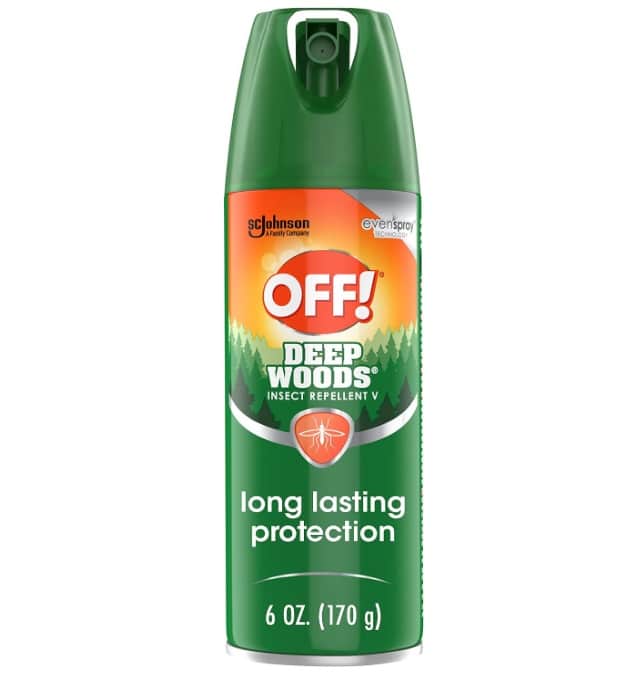
20. Bug spray, anti-itch cream, and a small first-aid kit
Bring a repellent you already know works for you and something for the bites you get anyway. Long sleeves and pants do a lot of the work here.
For the kit, I would pack pain relievers, stomach medication, antihistamines, bandages, and blister treatment. Keep prescriptions in your carry-on and bring a few extra days’ worth in case of delays. If you have a serious allergy or medical condition, make sure your guide knows about it on day one.
Buy all of this at home. You do not want to spend vacation hours hunting for it on the islands.
21. Camera gear, a GoPro, and a power bank
Wildlife is the reason most people come here, and this is one trip where I was very glad to have my camera and 400m lens. Bring extra memory cards, batteries, charging cables, and a lens cloth. A GoPro is fantastic for snorkeling footage.
Camera gear adds weight fast, so keep that 25-pound inter-island allowance in mind.
A power bank is worth packing for long excursion days. It has to go in your carry-on, not your checked bag, and the same goes for spare camera batteries.
One more note: drones are not allowed in Galápagos National Park, so leave yours at home.
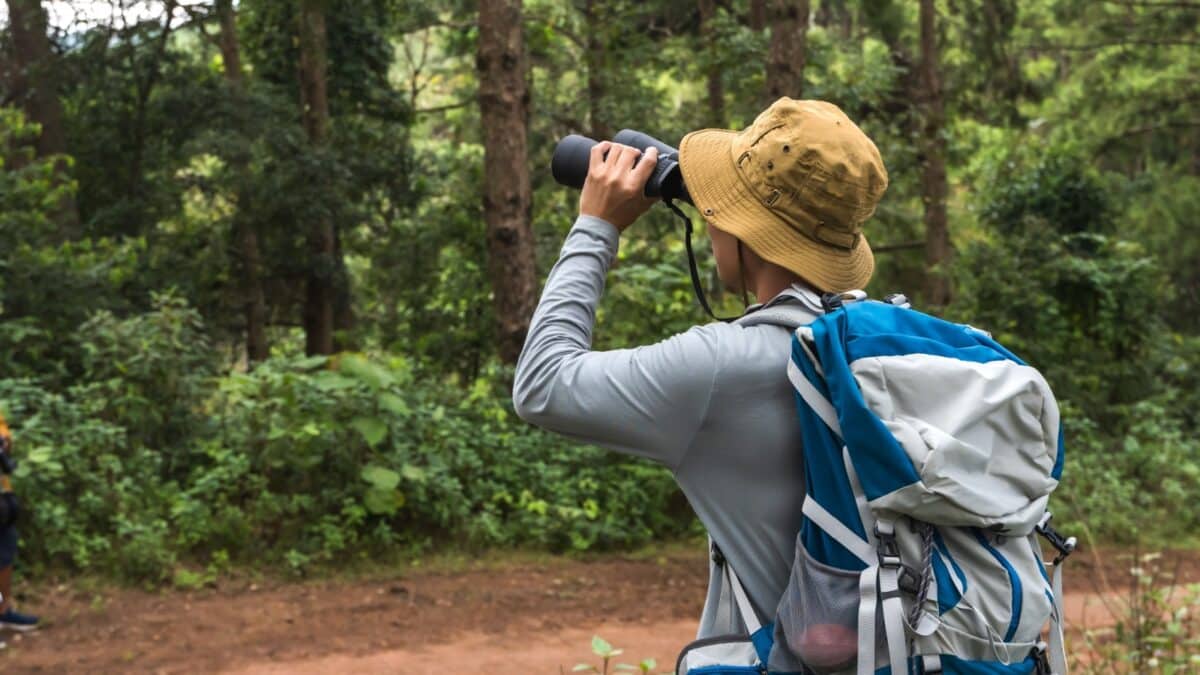
22. Binoculars
The animals here are famously unbothered by people, so you will get incredibly close to most of them. A compact pair of binoculars is still great for the birds and for scanning from the boat.
23. Toiletries and personal items
Bring your usual products in travel sizes, plus anything you would have a hard time replacing. Keep the routine simple, because you will be outside and in the water most days. I hardly wore makeup at all. A little powder and mascara at night was the extent of it.
What my husband packed
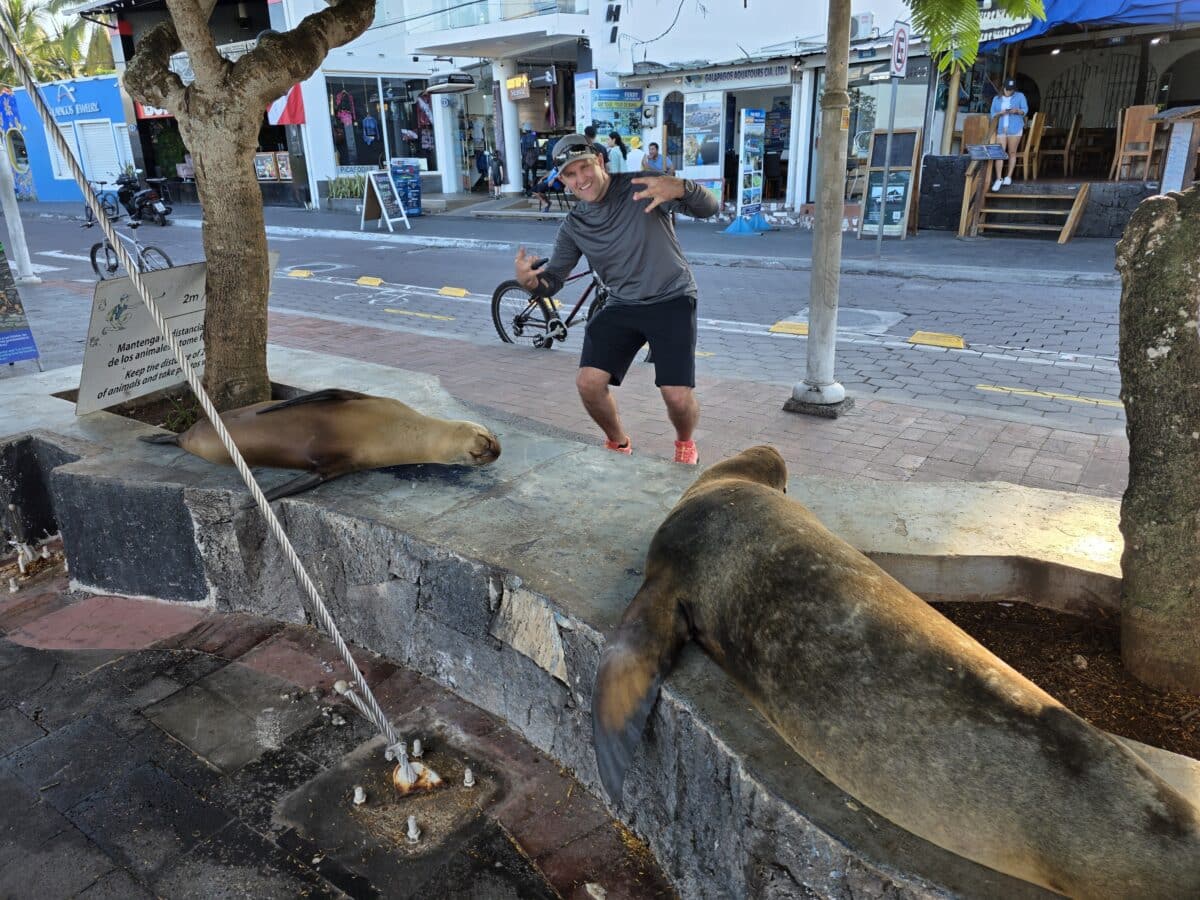
My husband followed the same system I did, with his own versions of the key pieces:
- Swimwear: two pairs of his favorite swim shorts, rotated so one could dry while he wore the other
- Sun shirts: a similar mix of Eclipse and REI sun shirts, worn throughout the trip
- Pants and shorts: his usual Eddie Bauer and Free Fly travel pants and shorts, which have also worked well on our other active trips
- Shoes: sneakers for almost everything, same as me
- Hat: He uses this hat for everything (see below)
- Sandals: At night, he changed into his old Teva sandals
- Travel shirt and shorts for dinners at night
- Snorkel gear: his own mask and snorkel, fitted at the same dive shop
Know before you go: cash, entry fees, and what you can’t bring
A few practical things surprised me, and none of them are gear.
Bring cash. Ecuador uses the US dollar, which is convenient, but ATMs on the islands are limited and unreliable, and plenty of places don’t take cards. Smaller bills in good condition are the easiest to use.
National park entrance fee: $200 per adult, $100 for children under 12. You pay it in cash when you land in the islands. The adult fee went up to $200 in August 2024.
Transit Control Card (TCT): $20 per person. You need this before you fly to the islands. Since May 2025, you can buy it online from the Galápagos Governing Council and pay by card, or get it at the Council’s counter in the Quito or Guayaquil airport. On the day of your flight, you show the card, your passport, and your return ticket at that counter. Start the online process at least a day ahead, and arrive two to three hours early if you need to buy it at the airport.
Confirm the current amounts and steps with your tour operator, since ours coordinated some of this for us, and requirements change.
You don’t need an outlet adapter if you’re American. Ecuador runs on 110V with the same flat-pin plugs we use at home.
Clean your shoes and gear before you fly. All bags go through a biosecurity inspection, and no fresh produce, seeds, plants, or animal products are allowed. Seeds stuck in the velcro of your daypack or the tread of your hiking shoes are exactly what they’re screening for.
Skip single-use plastics. They’re restricted in the park, and most hotels and boats have refill stations anyway.
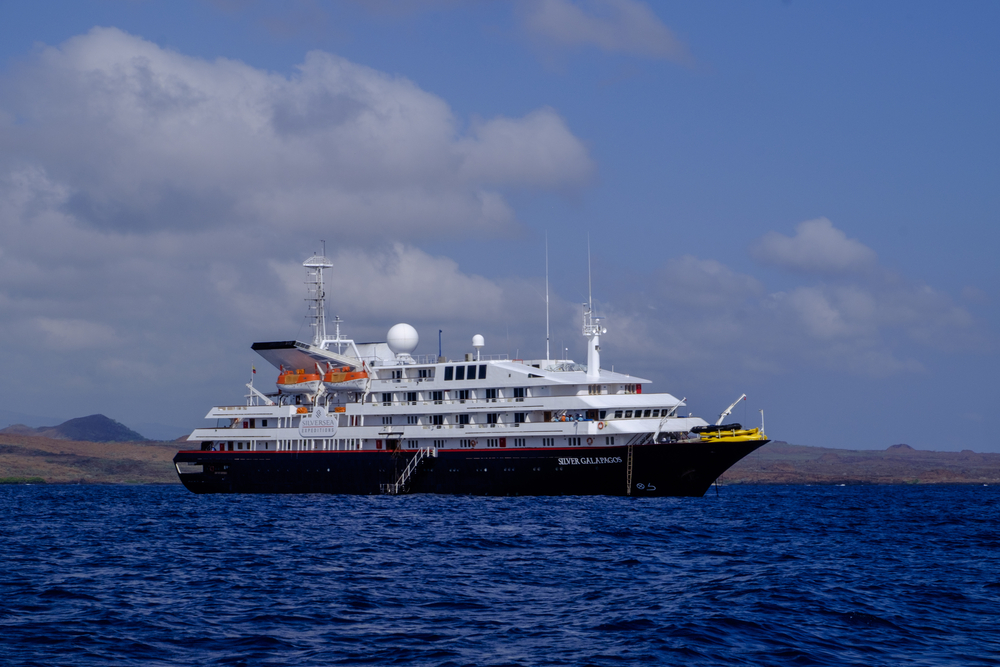
What to add for a Galápagos cruise
I did a land-based trip, so I can’t speak from experience about living aboard an expedition ship. Most of this list still applies, though, since cruise passengers do the same hiking, snorkeling, kayaking, and panga rides.
The one real addition is a pair of secure water shoes or sport sandals. Cruises use wet landings, meaning you step out of a small boat into shallow water and walk up the beach. Look for good traction and a back strap. My Birkenstocks were perfect for dinner and would have been useless for that. Check the planned excursions with your operator before deciding whether you need both casual sandals and water shoes.
Before you buy anything extra, ask your operator what’s included. Many ships provide snorkel gear, fins, wetsuits, water bottles, and toiletries.
Cabins have limited storage, so pack light even if your flight allows more. And expedition cruises are far more casual than big-ship cruises. One or two neat dinner outfits should be plenty, but check your operator’s guidance.
Travel insurance for the Galápagos
I always recommend travel insurance for a trip like this. The Galápagos is remote, and reaching more advanced medical care could require transportation off an island or back to mainland Ecuador. You may also have a significant amount of money tied up in flights, tours, hotels, or a cruise before the trip even begins.
I use Squaremouth to compare travel insurance policies and prices from different providers. Squaremouth is a comparison marketplace, rather than the company that actually insures the trip, so I can look at the coverage limits, exclusions, and prices side by side before choosing a policy.
For the Galápagos, I pay particular attention to emergency medical and medical evacuation coverage. I also compare trip cancellation and interruption, travel delays, missed connections, and baggage coverage. These can be especially relevant when an itinerary includes multiple flights, ferries, small inter-island planes, or a cruise departure that would be difficult to catch up with.
Ecuador’s official tourism website states that foreign tourists entering the Galápagos Province must have private health insurance. Entry requirements can change, so confirm the current rule before your departure and make sure the policy you choose satisfies it. I would also save the policy details and the insurer’s emergency-assistance number to my phone, keep an offline copy, and give a copy to my travel companion.
Galápagos packing checklist
Bags
- Lightweight suitcase or duffel
- Packing cubes
- Comfortable day backpack, with a rain cover or waterproof liner
- Dry bag or waterproof phone pouch
Clothing
- Two or three UPF sun shirts
- Two pairs of lightweight hiking or travel pants
- Two complete swim outfits
- Rash guard or UPF swim top
- One or two casual dinner outfits or dresses
- Light sweatshirt or jacket
- Packable rain jacket or poncho
- Quick-drying socks and underwear, plus extra socks
Shoes
- Comfortable sneakers
- Hiking boots, if you’re doing Sierra Negra or another long hike
- Comfortable sandals
- Secure water shoes or sport sandals, if you’re on a cruise
Sun and water
- Sun hat with a secure strap
- Polarized sunglasses and retainer strap
- Reef-conscious sunscreen
- Lip balm with SPF
- Snorkel mask and snorkel, if bringing your own
- Reusable water bottle
Health and laundry
- Seasickness medication
- Prescription and basic over-the-counter medications
- Small first-aid and blister kit
- Bug spray and anti-itch treatment
- Laundry soap packets
- Toiletries and personal items
Electronics and optics
- Camera, batteries, memory cards, and lens cloth
- Waterproof action camera, if desired
- Phone charger and portable power bank
- Compact binoculars
Documents and money
- Passport, travel documents, and travel insurance information
- Transit Control Card and return ticket
- Cash for the park entrance fee and for the islands
Final thoughts on packing for the Galápagos
The most useful things I packed were my Eclipse sun shirts, Title Nine swim separates, Eddie Bauer pants, Nikes, sun hat, and our own snorkel gear. Nearly everything I wore during the day could handle sun, water, or a trail, and my evening outfits were deliberately simple.
If I packed for this exact trip again, I would bring almost the same wardrobe. I would add my hiking boots for Sierra Negra, and I would do a much better job removing the film from my new snorkel mask before leaving home.
Related posts:


wonderful tips! thanks for sharing!
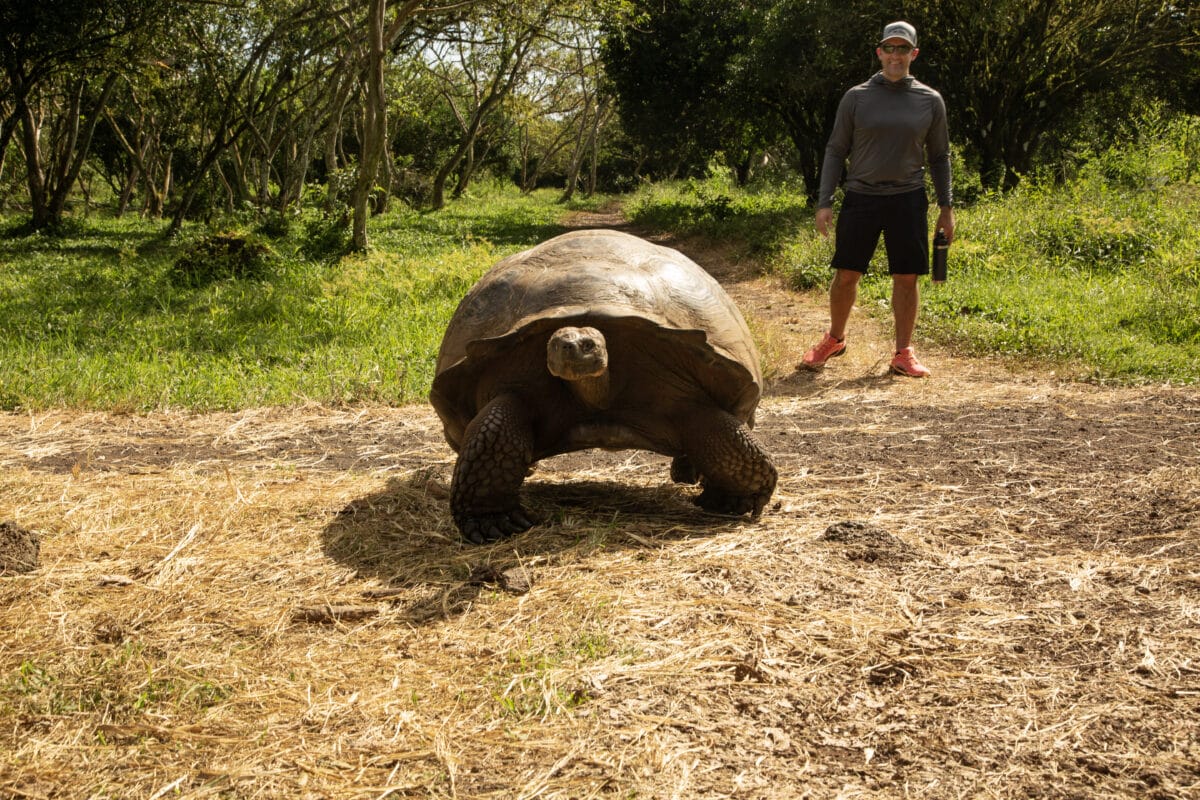
That’s a big tortoise.
Always a good back pack
Helpful list for anyone making the trip
Thank you for the info
My power bank was a lifesaver for me and my friend when we were in Amsterdam. My phone battery dies way too fast, so I don’t think I’ll ever travel without one again.
This sounds so exciting