
Will your winter be mild or brutal? The Old Farmer’s Almanac’s 2026–27 forecast is in
The 2026–27 outlook breaks down expected temperatures, precipitation, snowfall, and the timing of the season’s wintriest periods.
Every year, winter predictions start appearing while I am still trying to enjoy the last stretch of summer. As a Wisconsinite, I read them anyway, though. I need to know how long I can reasonably ignore the snowblower.
The Old Farmer’s Almanac has released its winter forecast for 2026–27, covering expected temperatures, precipitation, snowfall, and the periods most likely to bring rough weather across 18 regions.
Some parts of the forecast are reassuring. Others may have people checking their supply of sidewalk salt a little earlier than usual.
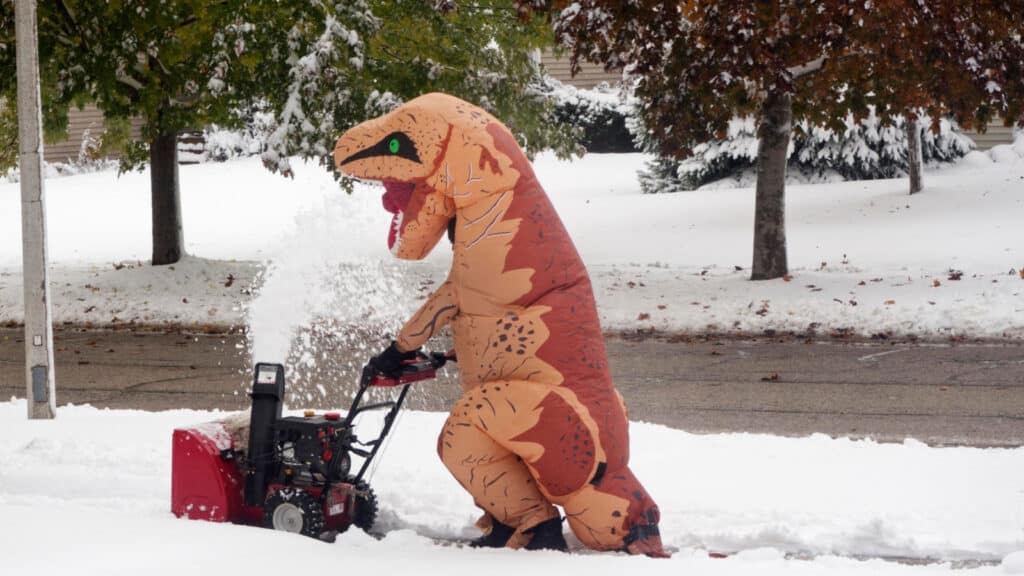
Where winter could be colder and snowier
The southern portion of the Northeast is expected to have below-normal temperatures and above-normal snowfall. Early and mid-January may bring the coldest weather, while the snowiest periods could arrive in December, January, and March.
The Appalachians are facing one of the tougher forecasts. Temperatures are expected to run below normal, with above-normal snowfall, particularly in northern areas. Mid-January and the second half of February could be especially cold.
The Ohio Valley is also expected to be colder than normal. However, snowfall may finish slightly below average for the season, showing that colder does not necessarily mean snowier.
The Atlantic Corridor, which includes much of the East Coast, has a gentler outlook. Temperatures are expected to run above normal, with below-normal precipitation and slightly less snow than usual.

The Upper Midwest may get a break
For those of us in the Upper Midwest, this forecast is far less dramatic than last year’s talk of a “classic winter wonderland.”
Temperatures are predicted to run above normal overall, although winter may turn colder during its second half. Mid- to late January is expected to bring the coldest stretch, with the best chances for snow in January, late February and early March.
Total snowfall is forecast to finish near or below normal. The eastern part of the region could receive more precipitation than usual, while the western portion may be drier.
The Lower Lakes region has a similar outlook: warmer than normal, wetter overall and near- to below-normal snowfall. The Heartland is also expected to be warmer and wetter, without an especially snowy winter.
A warmer winter is expected across much of the South
The Southeast, Florida, Deep South, and Texas-Oklahoma region are all expected to have above-normal temperatures.
Rainfall is more complicated. Northern Florida and the northern Southeast may be wetter than normal, while southern areas could be drier. The Deep South forecast flips between drier conditions in the north and wetter weather closer to the Gulf.
Texas and Oklahoma are expected to have a warmer, drier winter. Snowfall should be near normal, with the northern portion of the region having its best chances for snow in January and early February.
The West could be warm but surprisingly snowy
The High Plains and Desert Southwest are both expected to have warmer, drier winters with below-normal snowfall.
The Intermountain region is the notable exception. Temperatures may still run above normal, but precipitation and snowfall are both expected to be above average. Late November, late December and early February could bring the snowiest periods.
The Pacific Northwest is also forecast to be warmer, wetter and snowier than normal. The Pacific Southwest may have above-normal temperatures and precipitation, with near- to above-normal snowfall in the mountains.
Alaska is expected to be warmer than normal overall but snowier, while Hawaii is one of the few places forecast to have below-normal temperatures. Hawaii may also receive more rain than usual, particularly in eastern areas later in the season.
A powerful El Niño could shape the season
El Niño is one of the major factors behind this outlook. During an El Niño winter, unusually warm water in the equatorial Pacific can shift the jet stream and change where colder air, rain and snow travel across North America.
NOAA’s Climate Prediction Center said in August that El Niño was strengthening, with a greater than 90% chance of becoming very strong during fall and winter.
NOAA’s seasonal outlook generally favors warmer conditions across the northern U.S., with wetter weather becoming more likely across parts of the South, California and the East Coast later in winter. It does not agree with The Old Farmer’s Almanac on every regional detail, particularly in the Northeast.
How does The Old Farmer’s Almanac make these predictions?
The Old Farmer’s Almanac says its long-range formula combines solar science, climatology and meteorology. Forecasters also consider historical weather patterns, current solar activity, climate data and large-scale signals such as El Niño.
Despite its folksy reputation, the publication says signs like thick corn husks, abundant acorns and persimmon seeds do not factor into its official forecasts.
“Above normal” and “below normal” are based on 30-year averages rather than a comparison with last winter. The current baseline covers 1991 through 2020.
Long-range predictions are best treated as broad seasonal outlooks rather than precise local forecasts. They might help you prepare for the general shape of winter, but I wouldn’t plan a nonrefundable ski trip around one.
If this forecast has you feeling unlucky about where you live, take a look at which U.S. cities were ranked as having the worst weather overall. Your hometown might not seem so bad by comparison.
The 10 U.S. Cities With the Absolute Worst Weather, According to Research
This is where Mother Nature just can’t make up her mind.
Read more: The 10 U.S. Cities With the Absolute Worst Weather, According to Research
New Study Reveals 12 of the Best Places in the U.S. to Live for the Weather
Many of us deal with extreme temps—too hot or too cold—at different times of the year. But guess what? There are actually places out there with perfect, moderate temps and loads of sunshine. No crazy winters or heat waves!
Read more: New Study Reveals 12 of the Best Places in the U.S. to Live for the Weather
10 of the Worst States To Live In, According to a New Study
It’s a harsh world out there, especially if you’re trying to find the best place to call home. So, I’ve pulled together the top ten worst places to live based on real data from WalletHub, considering affordability, economy, education, quality of life, and safety. Get the rundown on why these states just don’t measure up.
Read more: 10 of the Worst States To Live In, According to a New Study
Cloud Seeding Sounds Like Sci-Fi — Here’s What It Really Does

If you’ve ever heard the phrase “cloud seeding” and thought, There’s no way that’s a real thing, you’re not alone. It sounds like something a movie villain would cook up in a secret lab, not a tool used in real-world weather management.
The 10 Most Miserable States to Live in America, According to a New Study
A recent study looked at all 50 states across 30 different metrics related to social, physical, economic, and emotional health. Some states, sadly, didn’t rank so well. If you live in one of these states and feel less than stellar, maybe it’s not too late to move to a more chipper state. Or better yet, encourage these places to make some changes so they’re ideal for living, working, and enjoying life!
Read more: The 10 Most Miserable States to Live in America, According to a New Study


We usually get a lot of snow.
interesting 🙂
In California we pray for snow.
WOW!!!!!!!
I wouldn’t mind a little snow
Thanks for the info but im in malaysia which doenst have season
I’m hoping for mild but we tend to get a lot of snow here I live