Stop Falling for These 6 Sneaky Restaurant Tricks—A Money Expert Reveals How They’re Designed to Make You Spend More
From “decoy dishes” to sneaky typography, here’s how menus manipulate you—and how to fight back.

Ever sit down at a restaurant, casually browse the menu, and somehow walk out having spent way more than you planned? You’re not alone, and according to a money expert, that’s no accident.
Fred Harrington, CEO of Proxy Coupons, says many restaurants are playing a psychological game you don’t even realize you’re part of. Menu design has become a carefully crafted sales tool that can nudge you toward pricier items without you even knowing it.
“Most people decide what to order in under 90 seconds,” Harrington explains. “Restaurants know this—and they’ve designed their menus to capitalize on that snap decision-making.”
Here are six sneaky tactics Harrington says restaurants use to get you to spend more (and what you can do to avoid falling for them).
1. They Remove Dollar Signs to Numb Your Brain
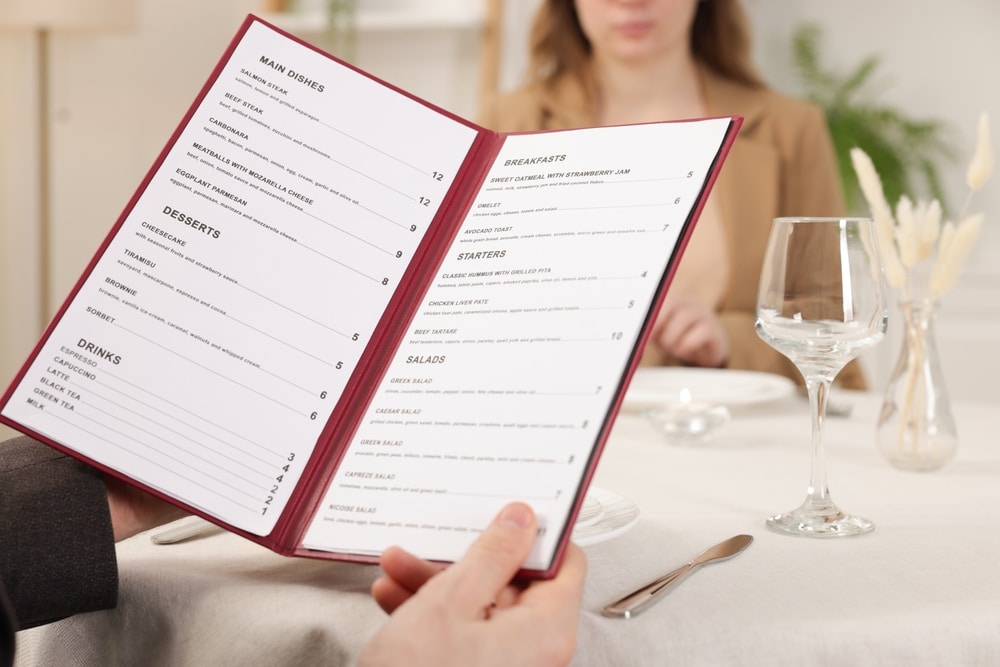
If you’ve ever seen a menu that just lists “18” instead of “$18.00,” it’s not just for style. It’s called “pain of paying” psychology.
“When you see a dollar sign, your brain immediately registers that as money leaving your wallet,” says Harrington. “But remove that dollar sign, and suddenly it feels more like a number than a cost.”
Upscale restaurants especially love this trick because it subtly encourages diners to spend more without the mental sting.
2. They Rely on the “Goldilocks Effect”
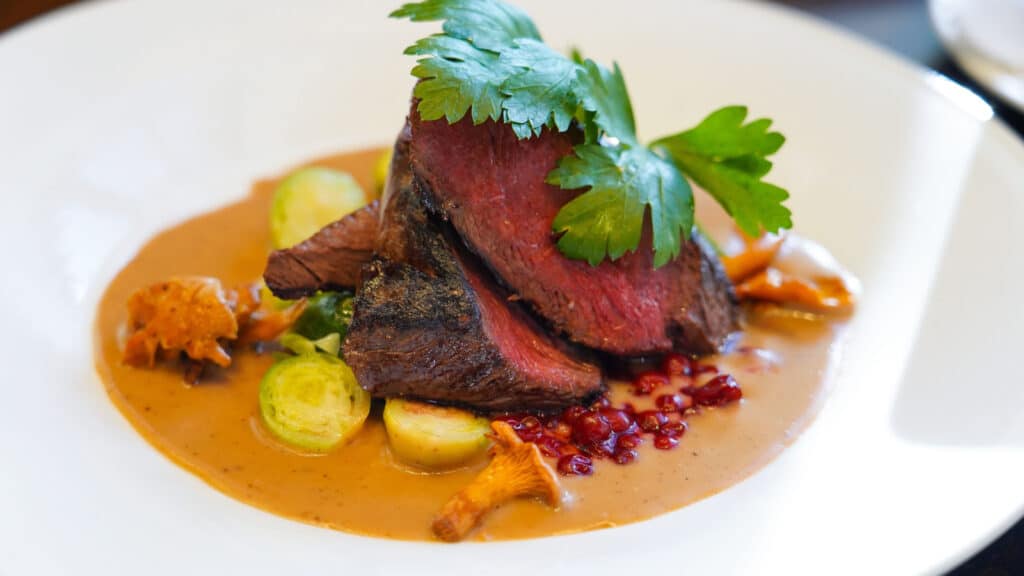
Menus often include three similar items with different price points—like a $28 sirloin, a $42 ribeye, and a $65 wagyu steak. Then, the middle option is usually the one the restaurant wants you to choose.
“The middle item tends to have the best profit margin,” Harrington says. “You’re not picking the cheapest or the priciest, so it feels like a reasonable choice—even if it’s still overpriced.”

3. They Use Decoy Dishes to Anchor You
Ever spot a $95 lobster special and think, “Well, I’ll just get the $55 salmon instead”? That’s the point.
Harrington explains: “That high-priced item is there to make everything else look affordable by comparison. It’s called anchoring, and it’s incredibly effective.”

4. They Know Exactly Where You’ll Look First
Menus aren’t just words on a page…they’re eye-tracking studies in action. According to Harrington, your eyes go to the center first, then move to the upper right. That’s where restaurants place their highest-margin items.
“Premium real estate,” he calls it. “They know exactly where to put those high-profit dishes.”
5. They Pad Descriptions to Add Perceived Value
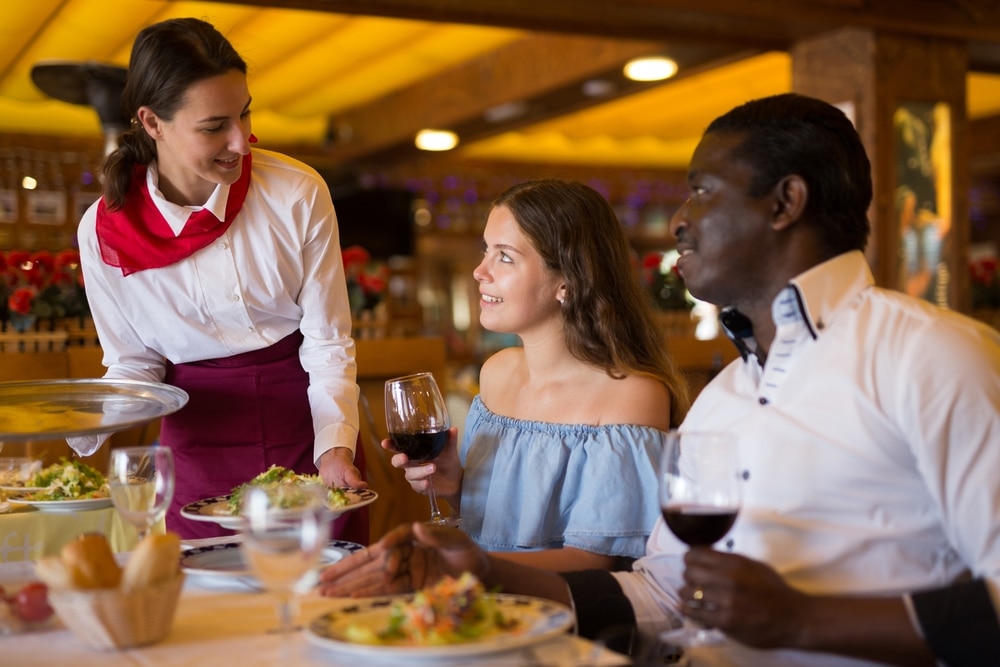
Which sounds fancier: “Grilled Chicken” or “Herb-Crusted Free-Range Chicken Breast with Roasted Seasonal Vegetables and Garlic Aioli”? That second one could be the exact same dish—but your brain is more willing to pay extra for it.
“The more descriptive the name, the more value people assign to it,” says Harrington. “It’s not about what’s on the plate—it’s about how it sounds.”

6. They Highlight What They Want You to Order
Boxes, bold fonts, color accents—these aren’t just design choices. They’re sales tactics.
“If an item stands out visually, there’s usually a financial reason,” Harrington notes. “Menus highlight what the restaurant wants you to notice, not what’s best for your wallet.”
How to Outsmart the Menu Tricks
According to Harrington, beating these tactics starts with awareness. “Once you know what to look for, you can’t unsee it,” he says.
Here are his top tips for budget-conscious diners:
- Scan the whole menu first. Don’t just latch onto the first fancy item you see.
- Set a budget ahead of time. If your entree budget is $25, ignore anything above it. That helps neutralize the anchoring effect.
- Don’t overlook the simple dishes. They’re often tucked in less flashy corners of the menu—but can be just as good (and way more affordable).
- Be wary of boxed or bolded items. These are often the most profitable—not necessarily the best value.
“Restaurants are businesses first,” Harrington reminds us. “They’re very good at getting people to spend money. But an informed customer is their biggest challenge.”
The Best Food to Try in Each of the 50 States, According to Americans

In this article, we will take you on a mouthwatering tour through all 50 states, exploring the most iconic and beloved dishes each region has to offer.
Read more: The Best Food to Try in Each of the 50 States, According to Americans
These Are the 10 Fattest Cities in America, According to a New Study

WalletHub analyzed 100 of the most populated U.S. metro areas using 19 different metrics—everything from obesity rates and high blood pressure to how easy it is to find healthy food or safe places to exercise. Based on this study, here are the 10 most overweight cities in America, counting down to the one that topped the list.
Read more: These Are the 10 Fattest Cities in America, According to a New Study
A New Study Just Revealed the Most Popular Fast-Food Chains in America
A new study analyzed regional Google search data from the past 12 months to determine the most searched-for fast-food restaurants in each state. The results are both delicious and a little surprising—especially if you thought burgers would beat pizza.
Read more: A New Study Just Revealed the Most Popular Fast-Food Chains in America
12 Foods Europeans Eat Regularly That Are Really Weird to Americans
From unique meats and seafood to fruits you’ve never heard of, there is a whole world of cuisine available in Europe that you’d be hard-pressed to find in the United States. According to an online forum, this list of popular European foods are nearly impossible to find in America.
Read more: 12 Foods Europeans Eat Regularly That Are Really Weird to Americans
11 Fast Food Spots Other States Wish They Had

When you travel, your eyes are opened to new cultures, sights, and even new fast-food restaurants. According to a recent online forum, the following regional chain restaurants are the most popular spots people miss the most.
Read more: Top 11 Fast Food Spots Other States Wish They Had